
CASE STUDY
Scaling Without Breaking Trust
Redesigning how 40+ countries interact with millions of records after a platform migration, with zero incidents.
Senior Product Designer · Relativity · 2025 (Shipped)
8+ PB
PER YEAR
$3-5M
ANNUAL SAVINGS
0
INCIDENTS
40+
COUNTRIES
MY ROLE
As domain lead across Enrichment, I led UX strategy, research direction, and UI design for this initiative over 13 months. I partnered with PM Eric Wendt and directed UX Researcher John Alton through 20 enterprise customer interviews.
THE PROBLEM
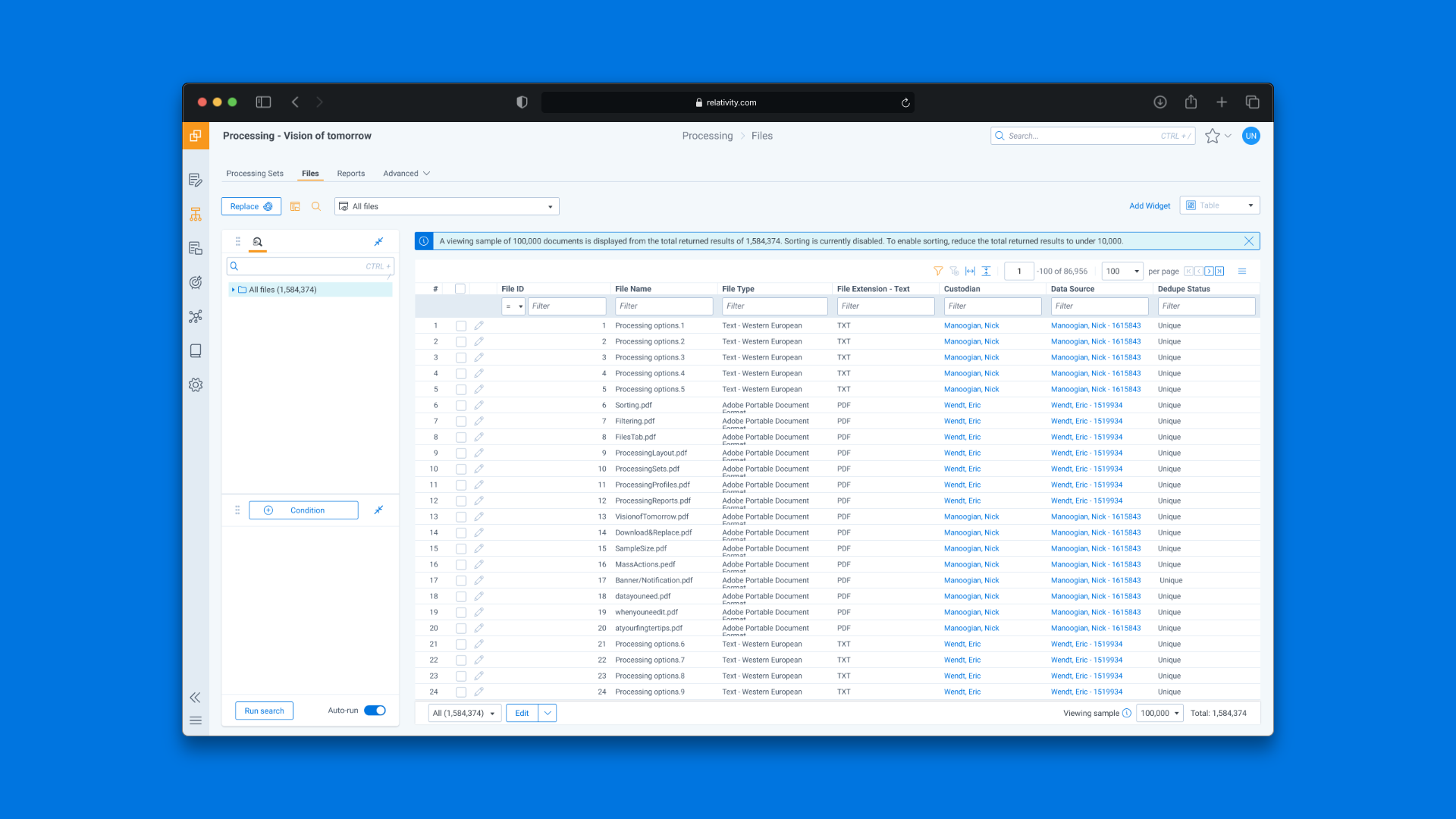
Relativity was migrating from SQL to a modern data store. The new system is more scalable — but it can't return and sort millions of records the way SQL could. Users had built their entire workflows around that capability.
SQL loaded 1.8M records in 5–8 seconds. The new system took 30. Sorting above 50K records became computationally impractical.
Get this wrong, and you break daily workflows at the world's largest legal organizations. Get it right, and you unlock $3–5M/year in infrastructure savings.
DISCOVERY
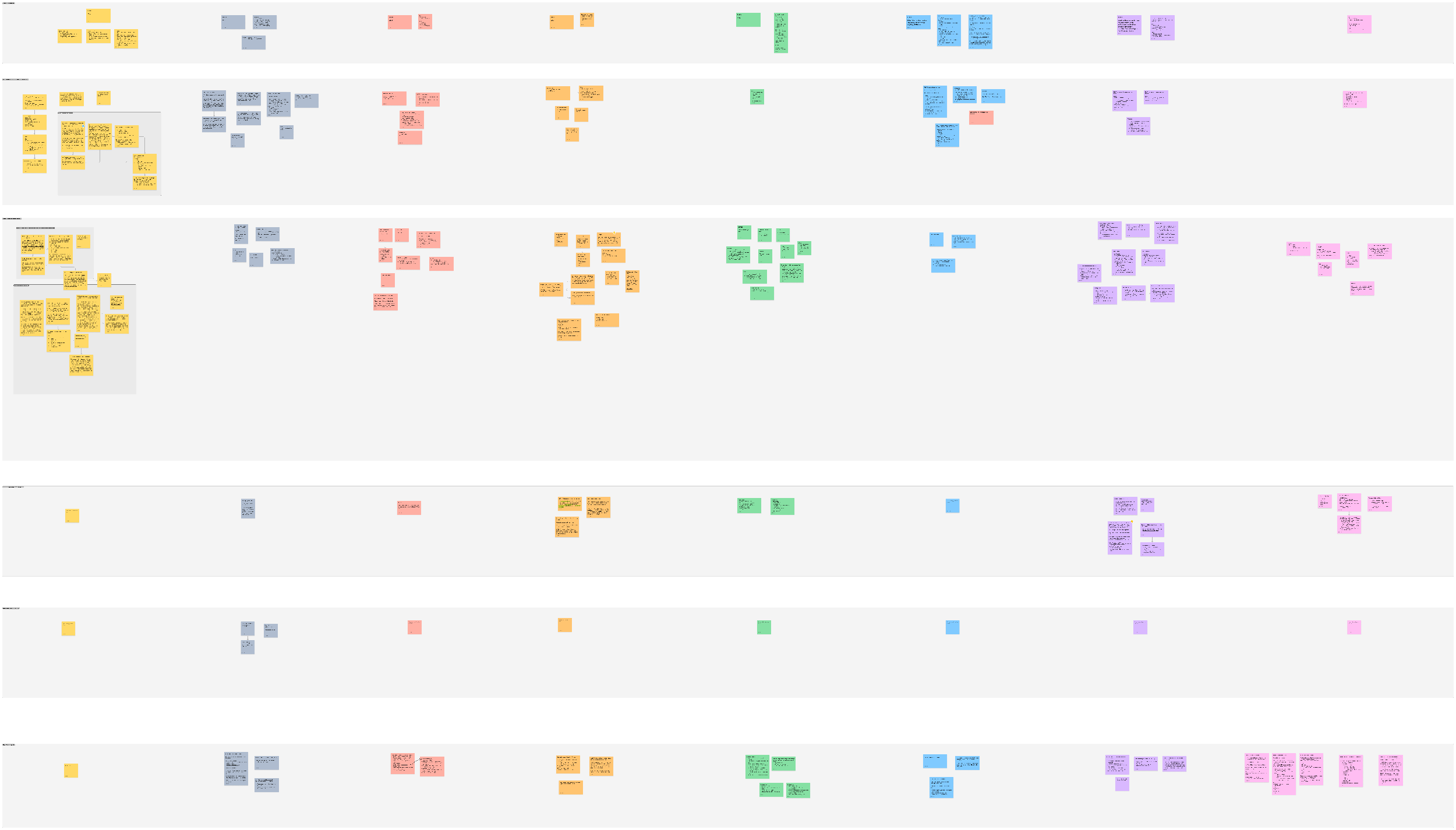
I ran structured discovery across 20 enterprise clients — Deloitte, BDO, EPA, Foley, Consilio, and others — to understand how people actually use the Files tab before we changed anything.
Three patterns emerged across all 10 interviews: sorting mattered less than expected, users already worked from samples, and full-set actions were non-negotiable.
WHAT WE HEARD
Sorting was less critical than expected
"Not really sorting when looking for exceptions. I don't think it would be a huge deal to us."— Foley
Users already work from samples
"When we filter it down, we usually get it within the first hundred. We don't normally go through page by page."— CDS (Complete Discovery Source)
But acting on the full set was non-negotiable
"As long as we have the ability to filter it down, personally don't care if it brings up all 1mm files."— Consilio
The mental model wasn't "I need to see everything." It was "I need to trust that my action applies to everything."
This became the design foundation.
DESIGN EXPLORATION
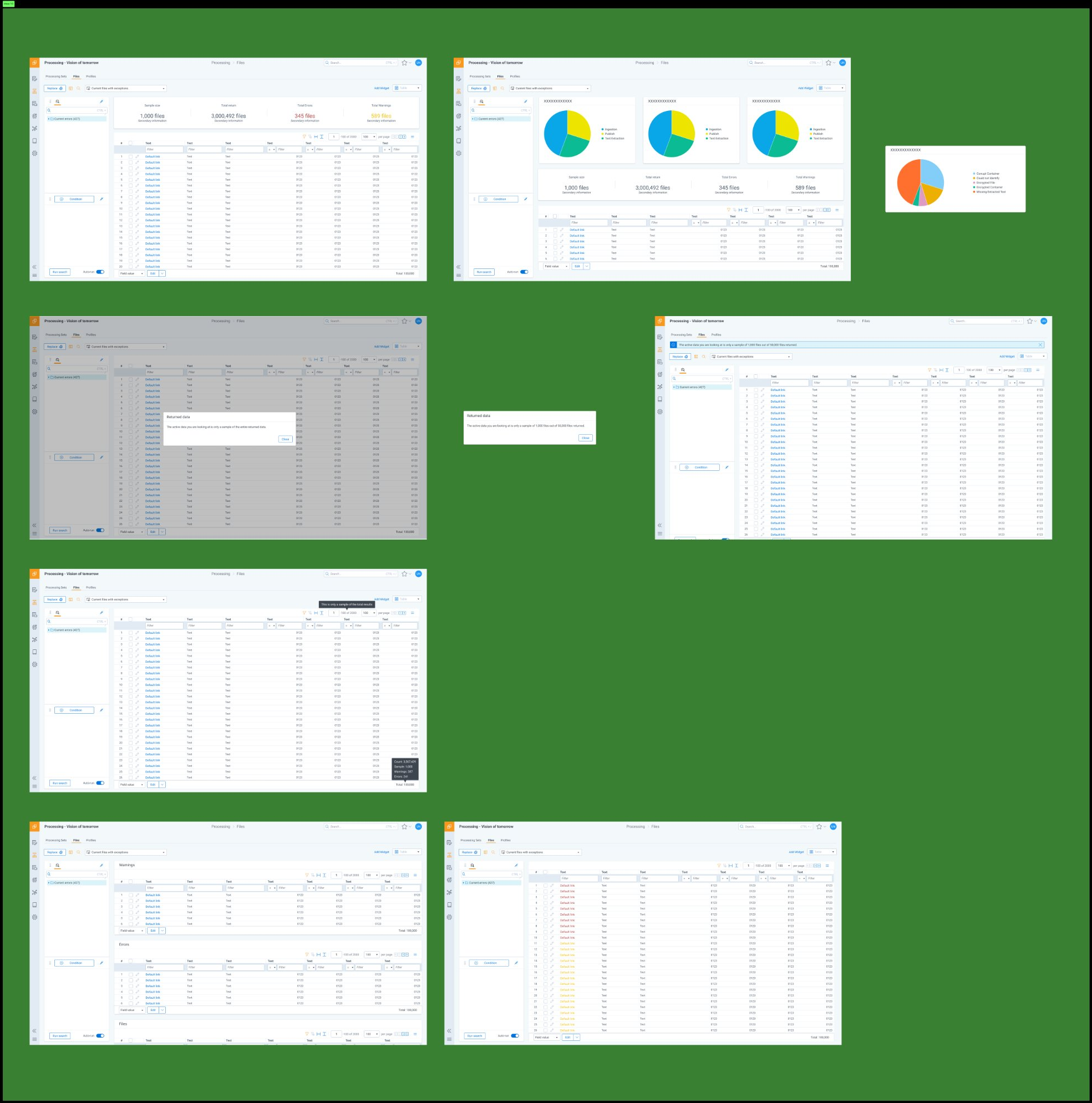
I explored multiple directions before converging. Leaderboard approaches surfaced status at a glance but added visual noise to an already dense interface. Visualization widgets like pie charts tested well in isolation but competed with the data table for attention. Combo layouts tried to do both and felt cluttered. A blank-start model required users to build every view from scratch, which contradicted their existing muscle memory.
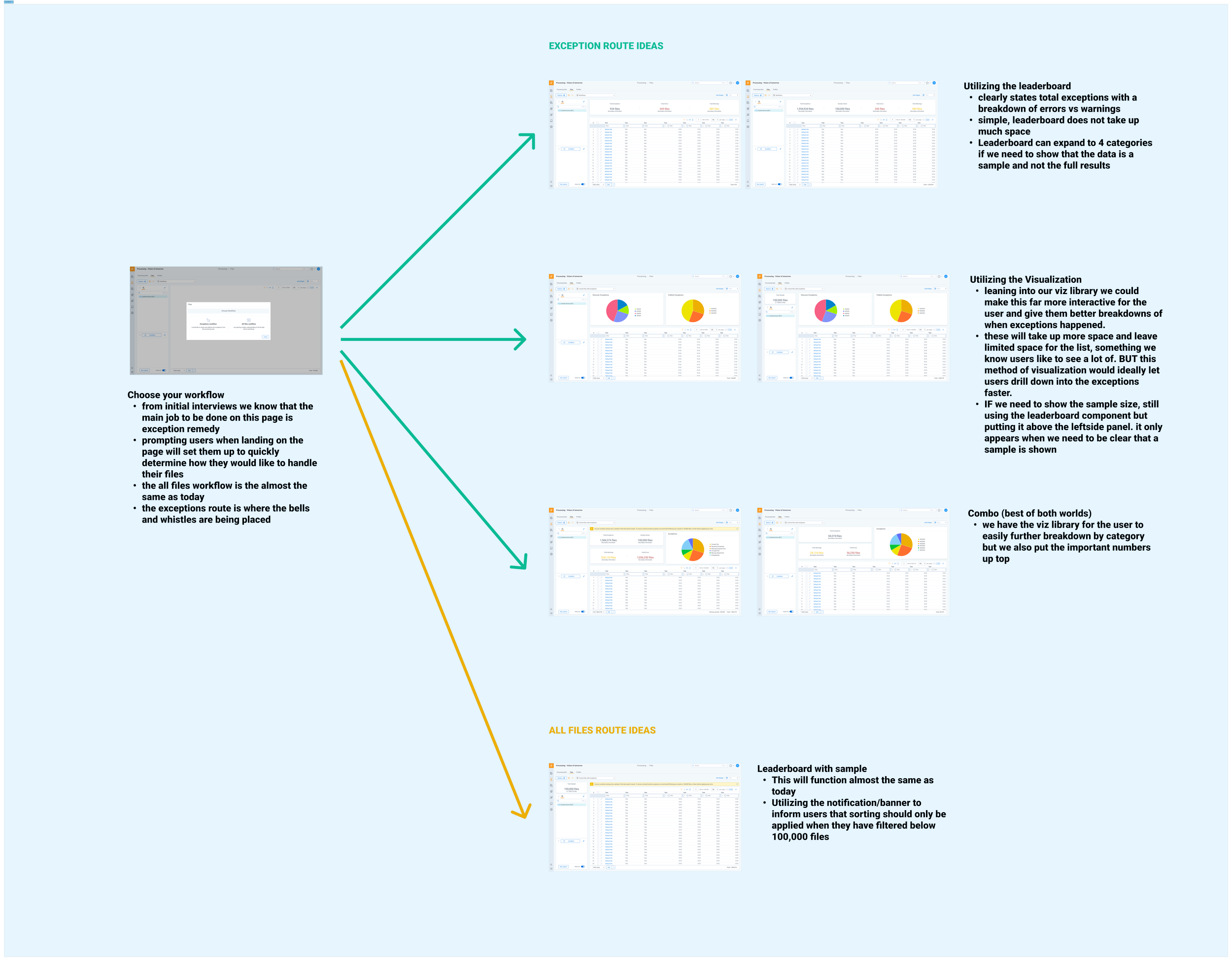
After review with PM and engineering, I narrowed to the exceptions route, where most traffic lands. Instead of reimagining the entire interface, we focused on the moment users notice something wrong and need to act. This let us preserve familiar patterns while introducing sampling and trust signals where they'd have the most impact.
WHAT WE SHIPPED
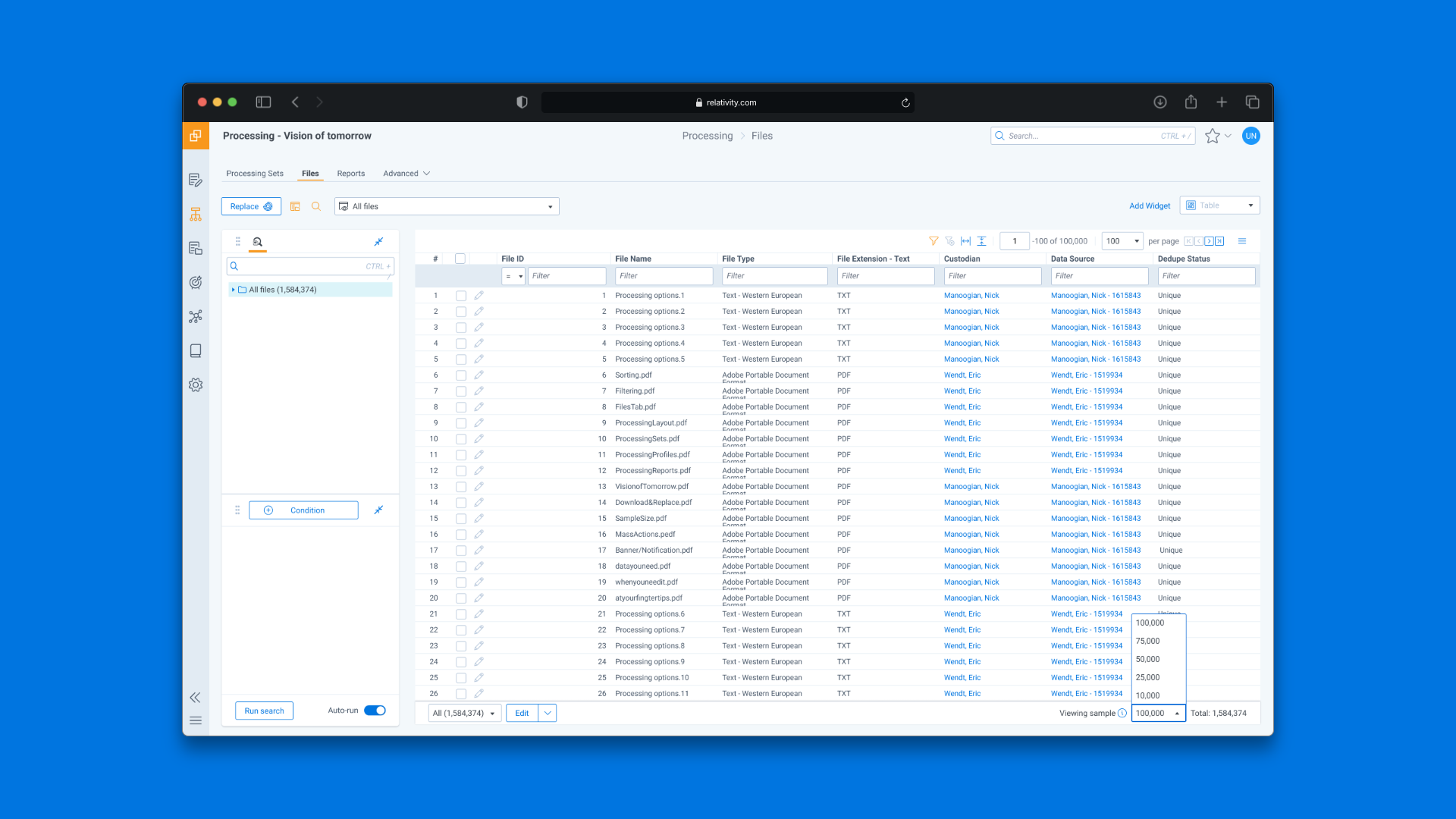
Configurable sampling. When results exceed the threshold, the list shows a sample — but widgets, mass actions, and total counts always reflect the full dataset. Users control the sample size from 10K to 100K.
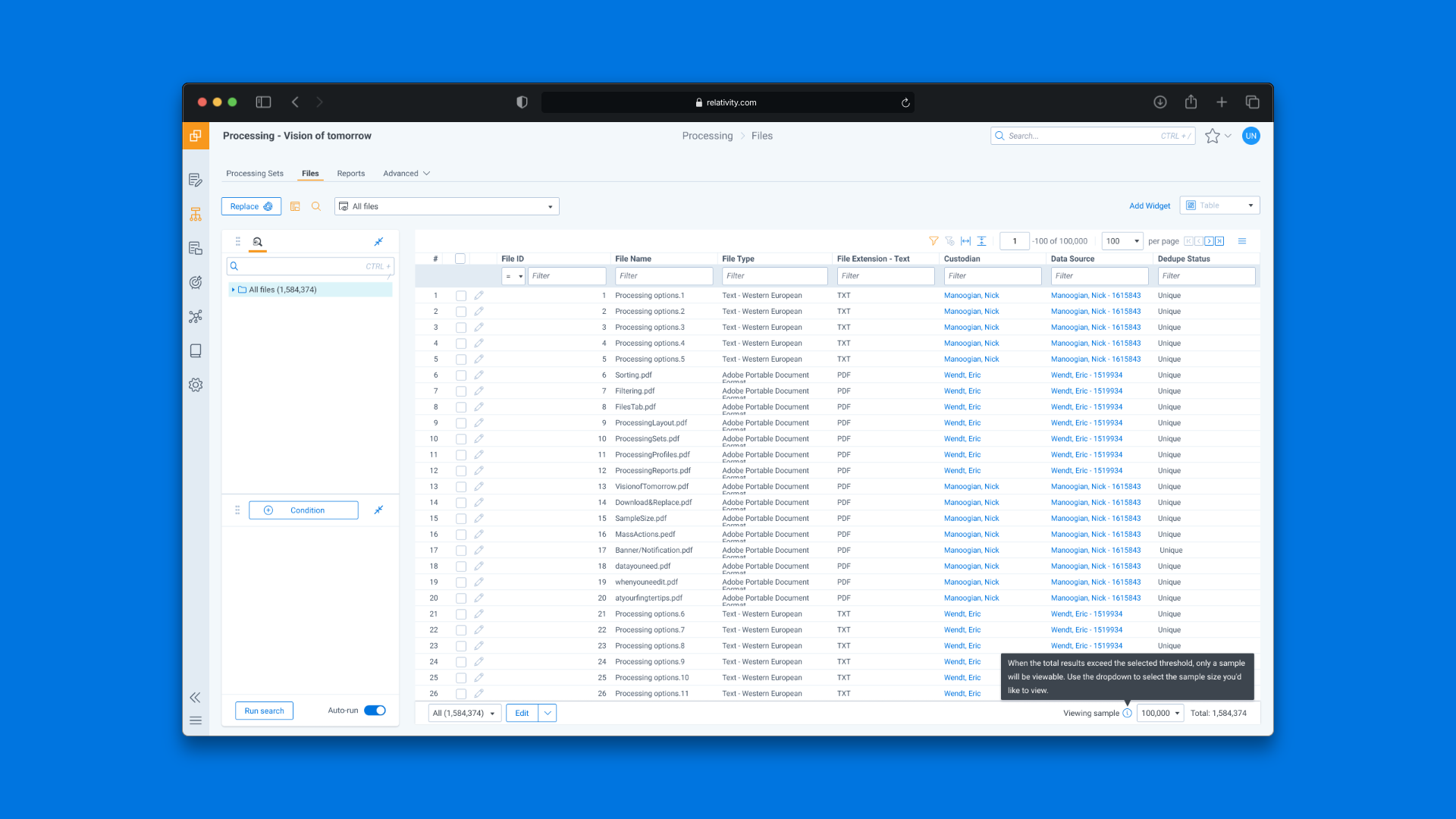
Trust signals stay put. The two numbers users actually check — mass action count and total record count — stay anchored to the full result, not the sample.
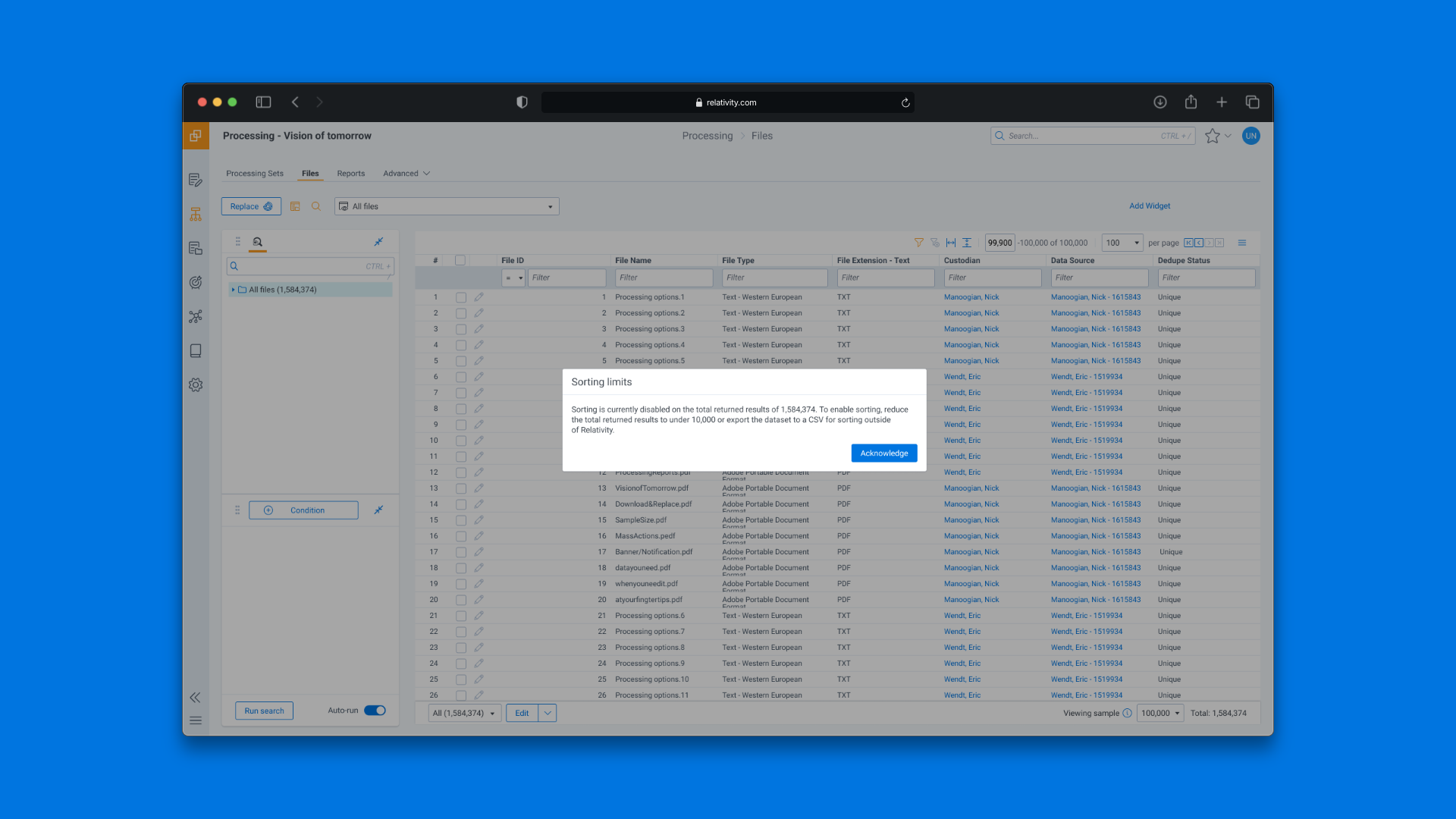
Progressive disclosure. Banners explain what's happening. Modals appear only when users hit a specific limitation.
ROLLOUT
6
PHASES
40+
COUNTRIES
0
INCIDENTS
Ring-based enablement from internal environments through international regions to full production. I monitored each phase alongside PM and engineering, reviewing incident reports and performance dashboards before approving promotion to the next ring. Promotion criteria at each phase: zero incidents, performance under 30 seconds.
OUTCOME
✓ Zero incidents across all 6 rollout phases
✓ Underpins $3–5M/year in infrastructure savings
✓ Customer workflows fully preserved with no retraining required
✓ Successfully decoupled a high-risk UI change from the platform migration
✓ Sampling model adopted as a pattern for other high-volume views across the platform
WHAT I LEARNED