
CASE STUDY
The Room Where It Happens
How workshop facilitation became a design practice that shaped four product roadmaps across four countries.
Senior Product Designer · Relativity · 2024–2025
280+
PARTICIPANTS
4
COUNTRIES
7
FORMATS DESIGNED
4
ROADMAPS FED
MY ROLE
Senior Product Designer — Relativity, Enrichment Domain. I partnered with PM Eric Wendt, Group PM Ashwini Somashekar, and Engineering Lead Cliff Rhyne. I owned workshop strategy, format design, facilitation, synthesis, and the connection of findings to product roadmaps.
Facilitation is how I work, not just something I do with customers. I run workshops internally to align on design direction, scope problem statements, and de-risk decisions before they reach a prototype. This case study focuses on the external sessions because they carry the highest stakes and the clearest through-line to shipped product.
THE MOMENT
Ten minutes, two rooms, one FigJam board
London, April 2024. PwC UK. We had planned a priority-ranking exercise with physical sticky notes. Six participants from their forensic technology team would vote on improvement categories for Processing Set visibility.
When we arrived, the room was too small. The team split across two rooms.
I had about ten minutes. I rebuilt the entire exercise in FigJam, gave everyone cursor access, and ran it digitally. Participants placed priority stamps from both rooms simultaneously. The votes clustered in real time. PwC ranked error information first. Enhanced stats second. These priorities directly shaped Milestones 1 and 2 of the Processing Insights project.
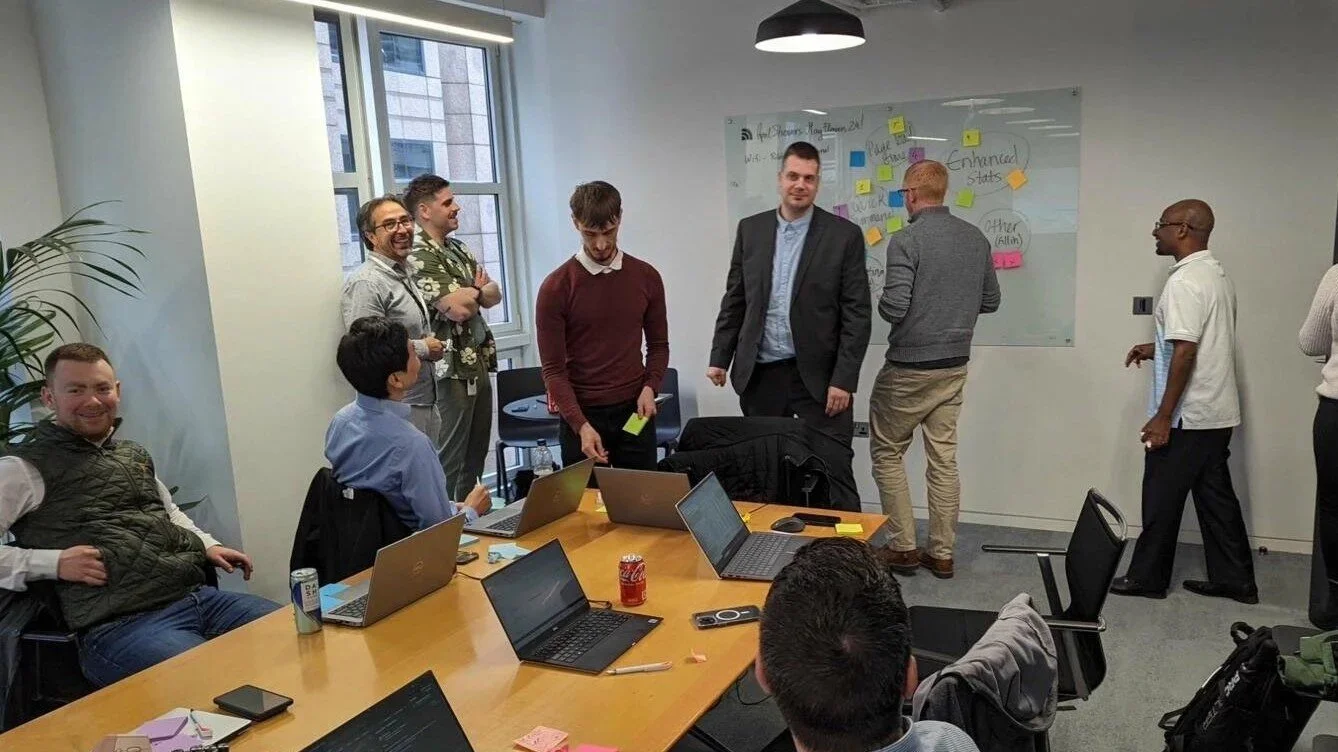
That pivot taught me something I leaned on for every session after: the format is a design artifact. When the room breaks, you redesign the format, not the agenda.
FACILITATION PHILOSOPHY
Hypotheses before solutions
If a session ends with a list of feature requests, it failed. If it ends with falsifiable assumptions that can be tested with existing data, it succeeded.
Pen and paper over prototypes
When a participant picks up a marker and draws on an easel-sized post-it, they commit to an idea in front of their peers. They defend it. They explain the why. A Figma prototype invites critique. A hand-drawn sketch invites collaboration.
Workshops should compound
Every session feeds multiple product areas. The London workshops were nominally about Job Visibility, but they also surfaced error workflows, message conversion, and broader roadmap inputs.
Hospitality is facilitation
Coffee, breaks, room temperature. These are facilitation decisions. By Australia, we had dinner reservations, dietary tracking, and a hospitality checklist as detailed as the agenda.
THE SESSIONS
London Onsite — April 2024
Four clients. Four days. 80+ participants. Fujitsu, Lineal, PwC UK, KPMG UK. I designed three workshops per session covering Job Visibility, RSMF/Cellebrite conversion, and error workflows.
Fujitsu brought a full PowerPoint walkthrough, unprompted. Lineal gave us the most detailed competitive feedback we had to date. KPMG was resistant to sharing their workflow. In the debrief, I identified the problem: our prompt was too exposing. After London, I reframed all discovery prompts around failure stories.
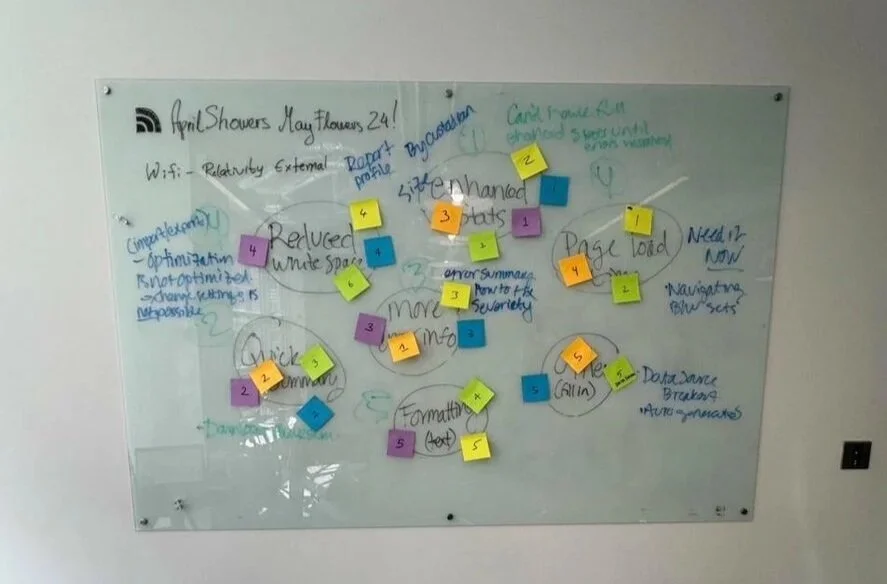
Winston & Strawn: Inspiration Mining — August 2024
One client. Full day. 9 participants. Instead of asking what is wrong, participants identified what they liked about their current tools. We peeled back the layers to find transferable concepts, not feature requests.
Their top finding was Processing Viz from Nuix. We traced it to the need for proof-of-life during long jobs. That confirmed our Milestone 2 direction one month before shipping.
"Relativity taking time to come on-site for this type of workshop is very meaningful to us."
— Winston & Strawn participant
Relativity Fest — October 2024
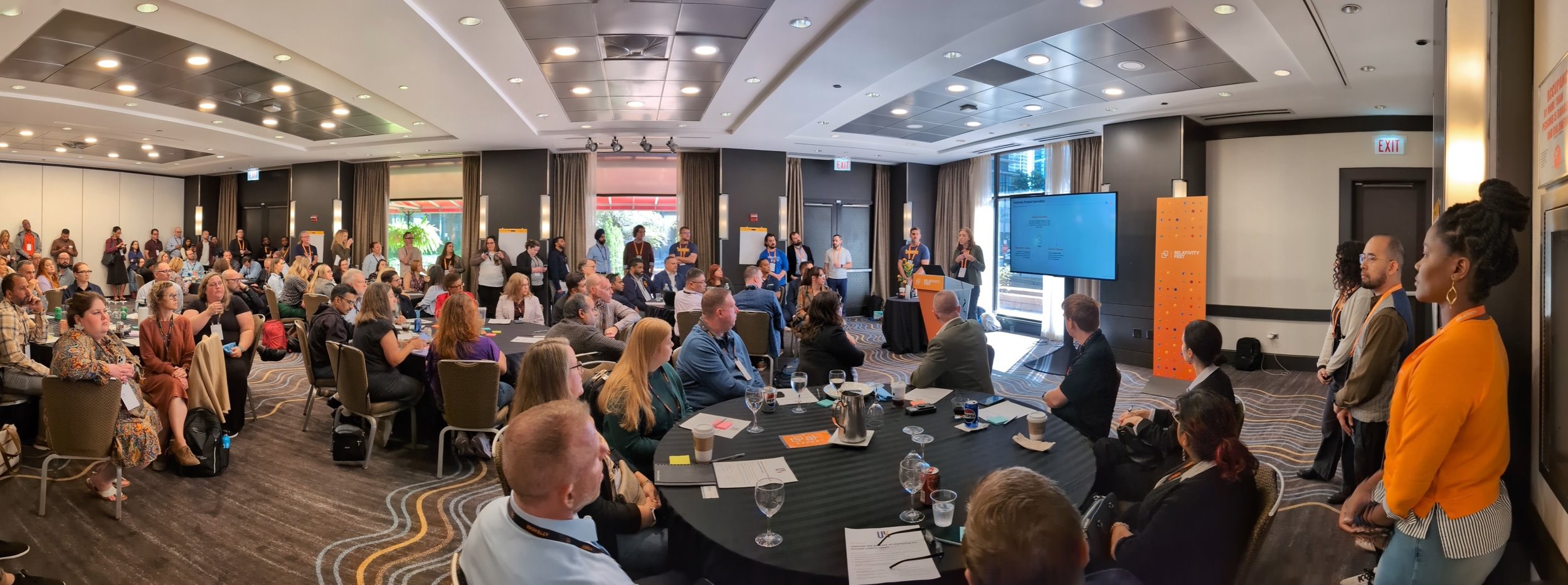
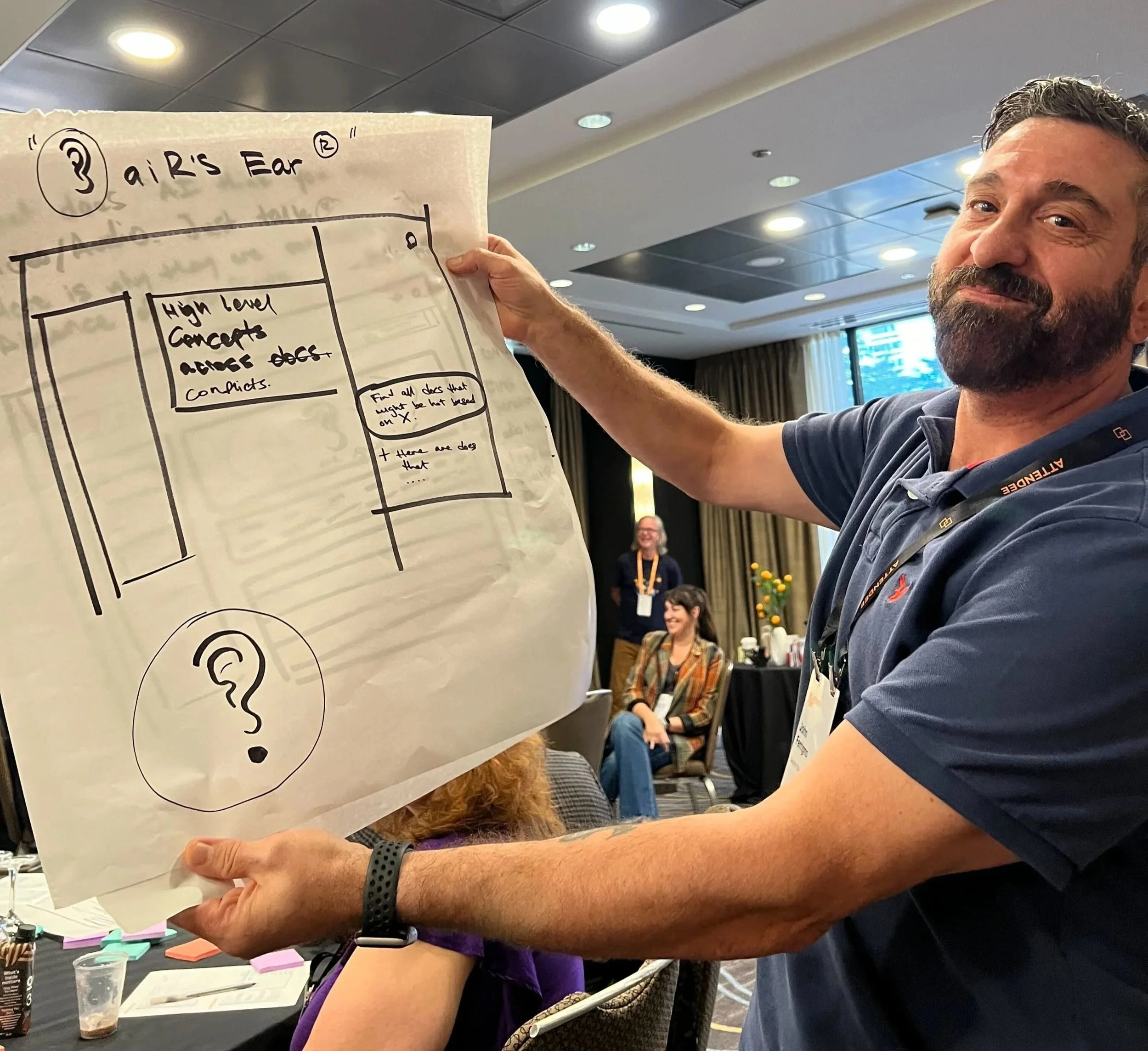
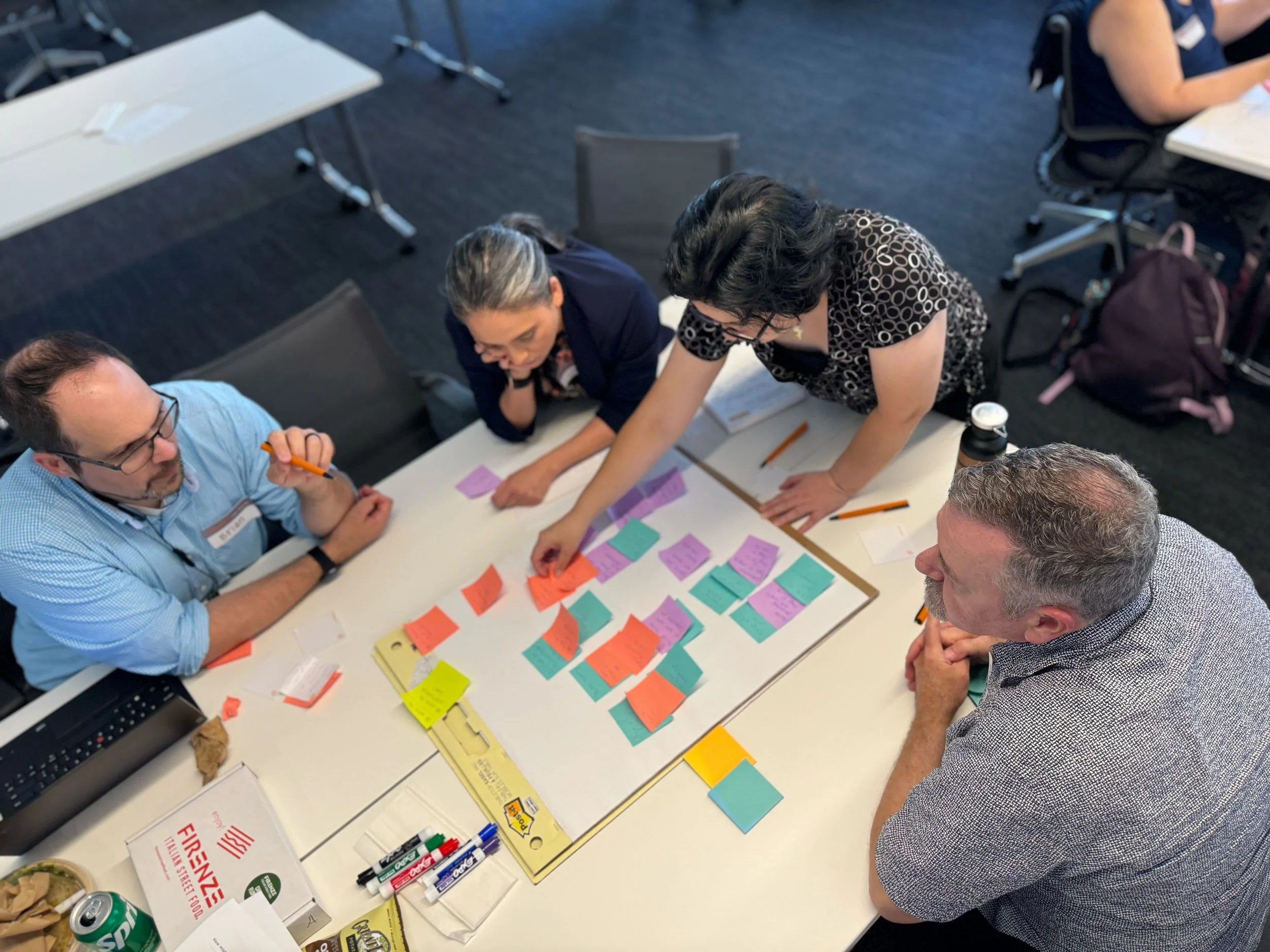
100+ attendees. Attendees formed cross-functional triads with an embedded Relativity SME. Tables raised physical cards to summon roaming AI experts. Groups had 30 minutes to ideate and mock up solutions on easel-sized post-its.
Chicago User Group — August 2025
20+ participants. Co-facilitated with PM John Alton. Participants clustered ideas into categories, then built paper prototypes of their ideal queue interface.
I synthesized outputs into five themes: ETA ranges, real-time reordering, protecting small jobs, pause/cancel controls, and live feedback. These directly fed the Worker Compute PAT targeting a 50% reduction in queue-related tickets.
Australia Discover Days — June 2025
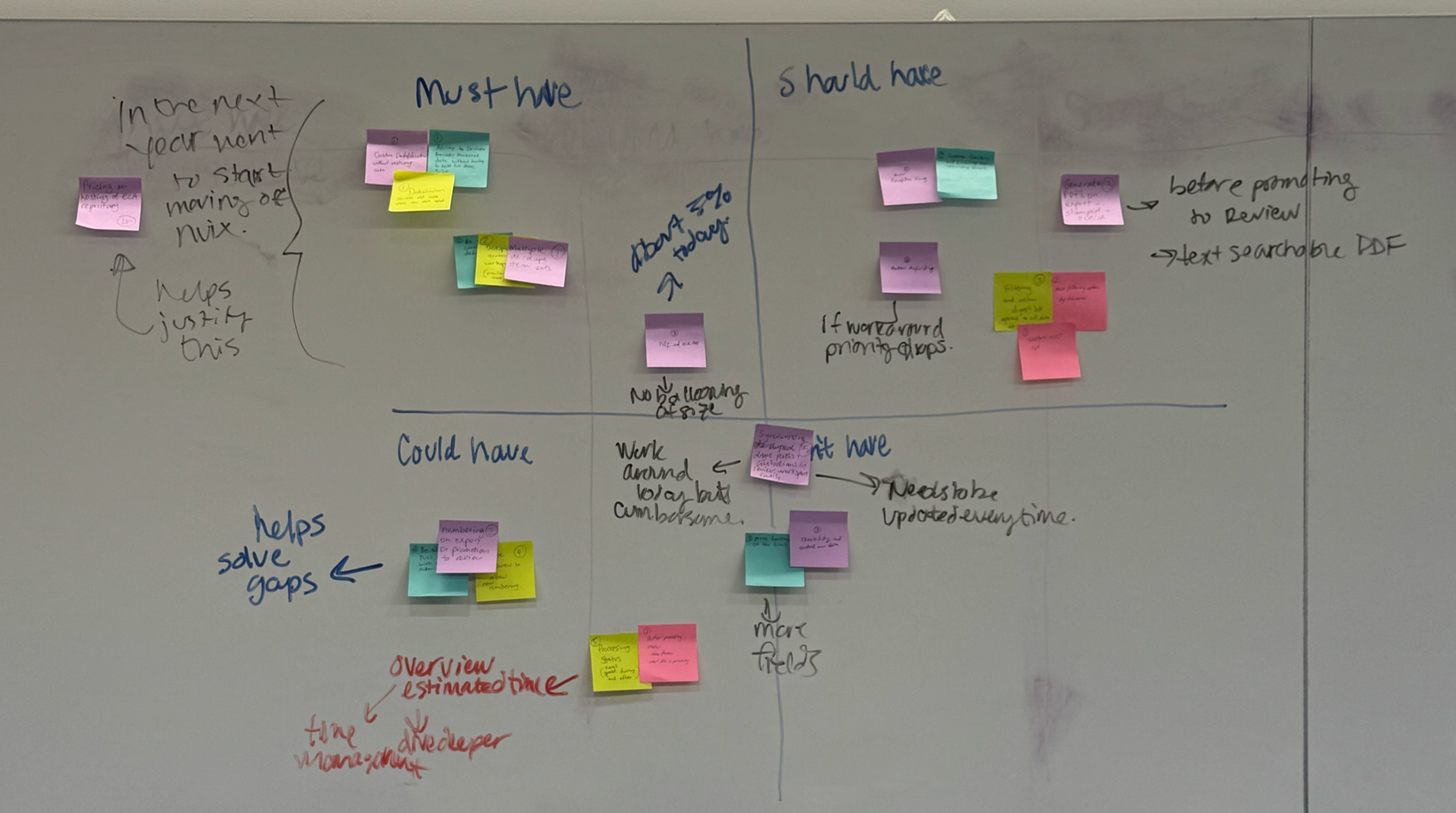
Four clients. Two cities. Five days. Law In Order, G+T, Westpac, CBA. Each morning, clients walked through their workflow while we captured pain points. Afternoons were chosen workshop blocks.
From Australia alone: 40+ pain points and 35+ feature ideas. The MoSCoW roll-up showed clear convergence: Queue Management was the top Must Have.
"The opportunity to engage with the team and other users in person is extremely valuable, and I think it would be great to see more events like this in the future."
— Sooraj R., Relativity user
Deloitte Relativity Days — September 2025
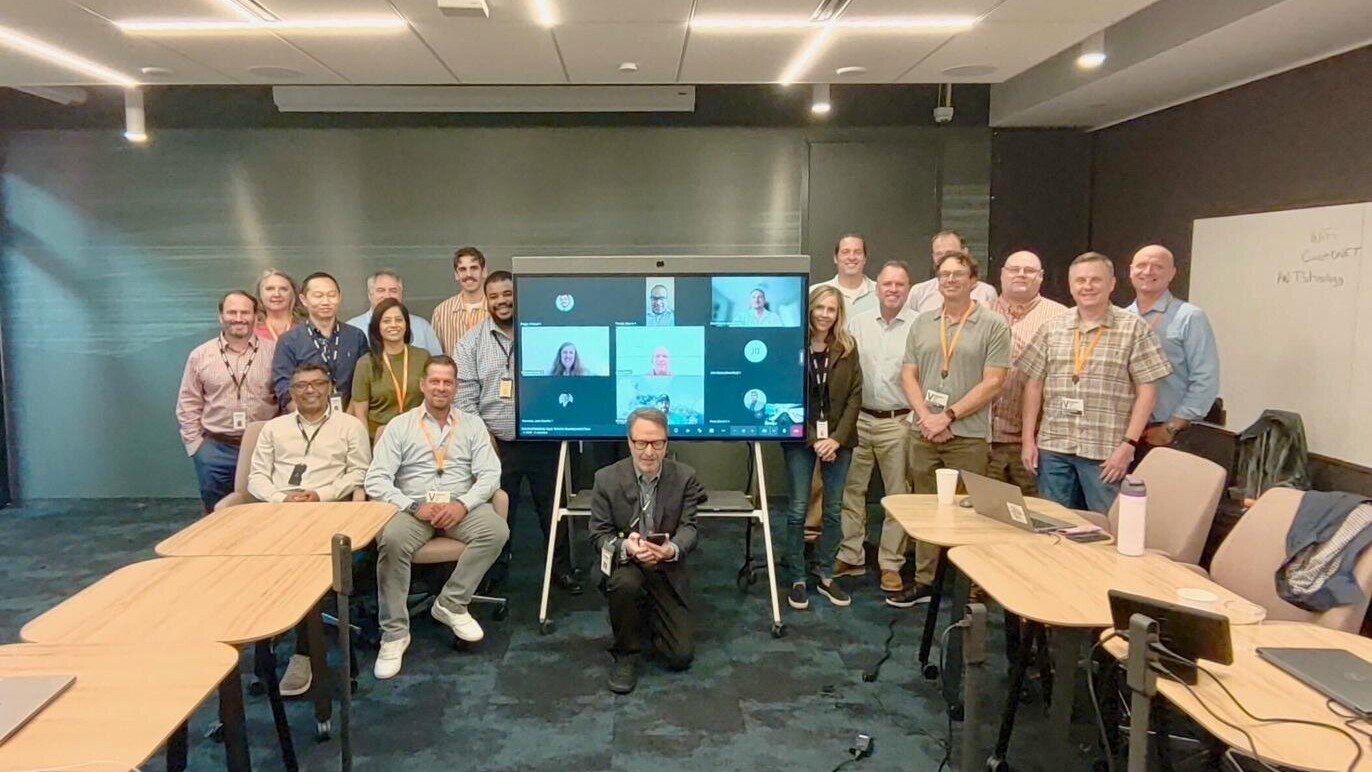
Three purpose-built workshops. 50-minute timeboxes. The most structured sessions I designed.
Workshop 1
Modern Attachments
Why-First Hypothesis format. Assumptions → falsifiable hypotheses → Confidence × Impact grid.
Workshop 2
GChat Conversion
Borrow/Adapt/Build. Each step tagged. Build items prioritized into Blocker/Enabler/Accelerator.
Workshop 3
Queue Management
JTBD + Trigger/Action/Outcome. Scenarios with metrics and human involvement level.
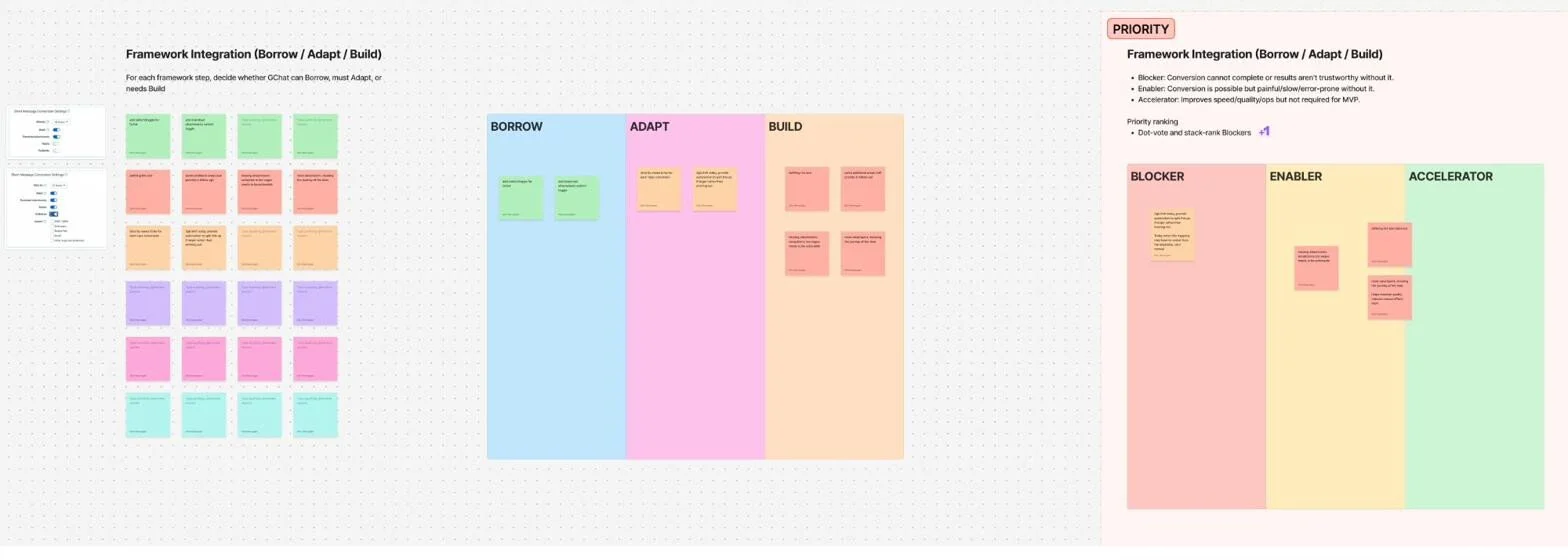
Post-its became product. Every session fed active initiatives. Nothing sat in a research archive.
OUTPUTS
Where it shipped
INTERNAL IMPACT
Scaling the practice
✓ International onsite playbook. Created after London. Used for Australia and Deloitte.
✓ Knowledge Share expanded from UX team to all Relativians after readouts caught executive attention.
✓ Coaching others to facilitate. Partnered with John Alton on his first facilitated workshop. His feedback: In short, you coached well.
✓ Formats adopted by other teams. Manager: "Systematized workshops so other teams can adopt the approach."
These external sessions are the visible part. Internally, I run workshops to align on design direction, scope problems, and ideate with PM and engineering. The external workshops get the photos. The internal ones build the muscle.
WHAT THE WORK LOOKED LIKE TO OTHERS
"His ability to frame questions in a way that start off very open-ended and then ask follow-ups that focus in on the customer responses is something I try to emulate. All those 'how would you expect...' questions are gold."
— Eric Wendt, Senior Product Manager
"Your positivity enabled a safe space for exploring ideas, and your pragmatism kept us grounded, which together ensured the workshop produced relevant, useful data. In short, you coached well."
— John Alton, UX Researcher
REFLECTIONS
Reading resistance
KPMG was not open to sharing their workflow. After London, I reframed all discovery prompts around failure stories. Specific problems are easier to share than proprietary processes.
Knowing when to stop collecting
There is a pull to keep running one more exercise. By Deloitte, every session had a defined What We Will Leave With. If we hadn't produced those outputs by the timebox, the session failed.
Workshops are not theater
A workshop that produces energy but no decisions is a performance. A workshop that produces a ranked priority list with owners and next-action dates is a design tool.